
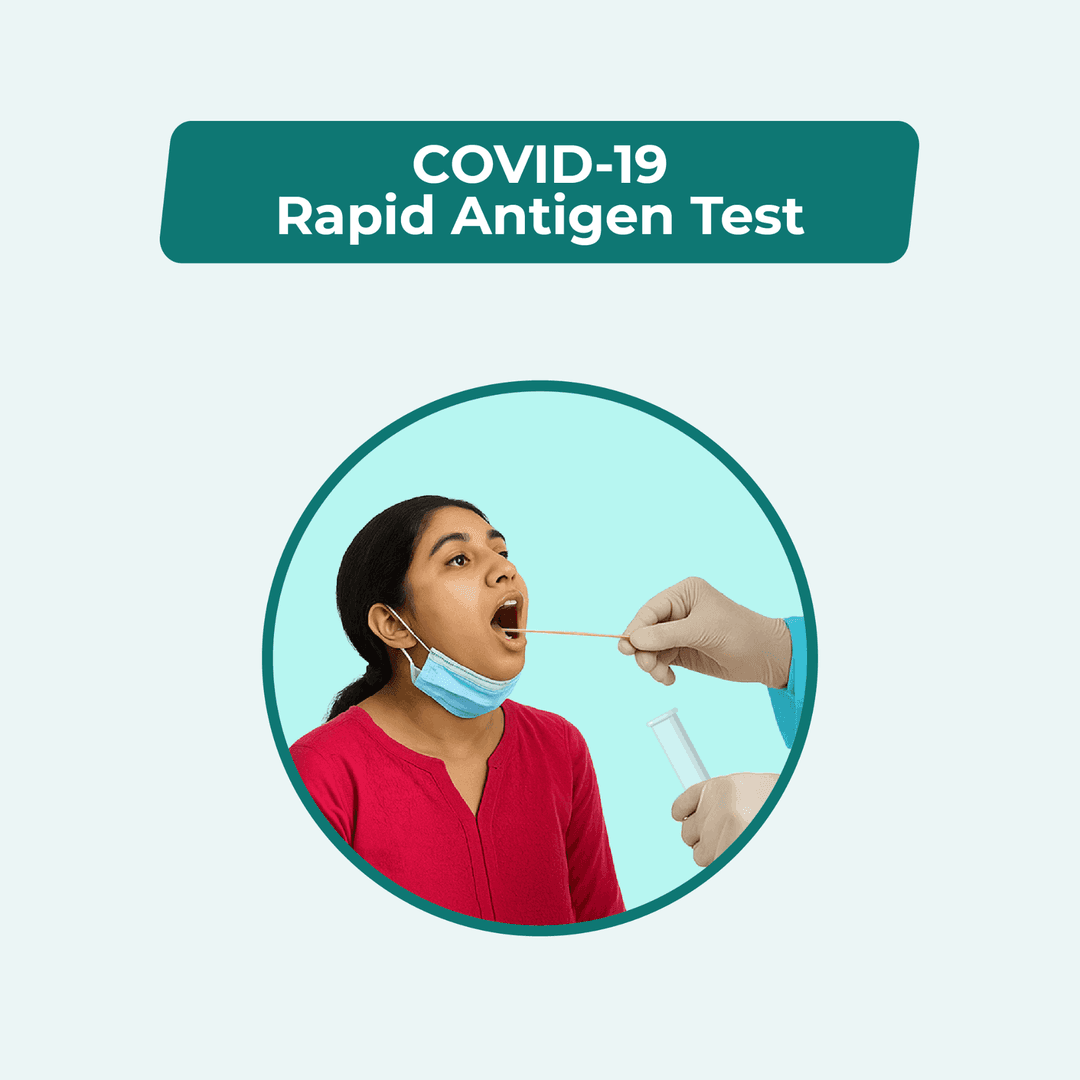
COVID-19 Rapid Antigen Test
Report in 12 hours
Booked 55 times
COVID-19 Rapid Antigen Test

Detecting COVID-19: The Rapid Antigen Test Solution""Swift Screening: Understanding the COVID-19 Antigen Test- In Minutes, Not Days: The Antigen Test for COVID-19""Spotting the Virus: Rapid Antigen Testing Explained""Fast Results, Accurate Diagnosis: COVID-19 Antigen Testing""Empowering Detection: The Role of Antigen Tests in COVID-19 Management""On-the-Go Testing: The Promise of Rapid Antigen Tests for COVID-19""From Sample to Solution: The Process of Antigen Testing for COVID-19""In the Race Against COVID-19: The Vital Role of Antigen Tests""A New Frontier in Testing: Understanding Rapid Antigen Tests for COVID-19"

The Ibn Sina Trust
Praava Health
Dr Lal PathLabs
Omnicare Diagnostic Limited
Thyrocare Bangladesh Ltd
Brac Healthcare
Popular Diagnostic Centre Ltd
JG Healthcare
Sample Type
nasal swab
saliva
Fasting Required
No
Description

Govt. Price= 500/- Material Cost + Service Charge = 700/- The COVID-19 Rapid Antigen Test is a diagnostic test that detects specific proteins on the surface of the SARS-CoV-2 virus. It involves taking a sample from the nose or throat using a swab and then testing it for the presence of these proteins. Results are usually available within 15-30 minutes, making it a quick and convenient way to determine if someone is currently infected with the virus.

Covid Safety

Assured

Free Report

Counselling

How our test process works!

Step 1

Sample Collection

Vaccinated Phlebotomists collects from syringe in the barcoded vials

Step 2

Sample Storage

Only vaccinated phelbos are assigned orders

Step 3

High Tech Facility

Lab ingests the sample into processing machines which are 100% automated

Step 4

Accurate Digital Reports

The reports are generated by the processing machines and clinically correlated by doctors

Overview
Sample Collection: The test usually involves collecting a sample from the nasal cavity or throat using a swab. Some tests may also allow for saliva samples. Test Procedure: The collected sample is then mixed with reagents that target specific viral proteins, such as the spike protein on the surface of the virus. Detection: If the virus is present in the sample, the targeted viral proteins will bind to the reagents. This binding produces a visible result, often within minutes. A positive result indicates the presence of the virus. Interpretation: Results are typically interpreted visually by observing changes in color or appearance of test lines on a testing strip. Some tests may also use a small device to interpret the results automatically. Accuracy: Rapid antigen tests are generally less sensitive than PCR tests, which are considered the gold standard for COVID-19 diagnosis. They may produce false-negative results, particularly in individuals with low viral loads or in the early stages of infection. However, they are often faster and less expensive than PCR tests, making them useful for mass testing, rapid screening, and point-of-care testing in various settings such as clinics, workplaces, and airports. Limitations: It's important to note that a negative antigen test result does not necessarily rule out COVID-19 infection, especially if someone has symptoms consistent with the disease. In such cases, confirmatory testing with a PCR test may be recommended.
Risk assessment
Sensitivity and Specificity: RATs vary in their ability to accurately detect the presence or absence of the SARS-CoV-2 virus. Sensitivity refers to the ability of the test to correctly identify those with the virus (true positive rate), while specificity refers to the ability to correctly identify those without the virus (true negative rate). Lower sensitivity or specificity can lead to false results. False Positives: A false positive occurs when the test incorrectly identifies a person as having COVID-19 when they do not. This can lead to unnecessary stress, isolation, and potentially unnecessary treatments or interventions. False Negatives: A false negative occurs when the test incorrectly identifies a person as not having COVID-19 when they actually do. This can lead to the spread of the virus if the individual mistakenly believes they are not infected and does not take appropriate precautions. User Error: Proper administration and interpretation of RATs are crucial for accurate results. User error, such as improper swabbing technique or misinterpretation of results, can affect the reliability of the test. Variant Detection: Some RATs may have reduced sensitivity in detecting certain variants of the virus, which could impact their accuracy in regions where these variants are prevalent. Timing of Testing: RATs may have varying performance at different stages of infection. They might be less effective during the early or late stages of infection compared to molecular PCR tests. Regulatory Approval and Quality Control: Ensuring that RATs have undergone rigorous validation and have received regulatory approval can mitigate risks associated with inaccurate results. Additionally, quality control measures in manufacturing and distribution are essential for maintaining test reliability.
Ranges
Range: The Rapid Antigen test detects the presence of viral antigens in the sample. A positive result indicates the presence of SARS-CoV-2 viral antigens, suggesting an active infection. A negative result indicates the absence of detectable viral antigens at the time of testing. However, no test is 100% accurate, and false positives or false negatives can occur.
Test result interpretation
Interpretation: Positive: Presence of viral antigens, indicating an active COVID-19 infection. Negative: Absence of detectable viral antigens at the time of testing. However, a negative result does not completely rule out the possibility of COVID-19 infection, especially in individuals with symptoms or recent exposure to the virus. Invalid: The test result cannot be interpreted, often due to issues with the test procedure or sample quality.
Sample types
Sample Type Summary: The Rapid Antigen test typically uses nasal or nasopharyngeal swab samples for testing. The swab is inserted into the nostril to collect a sample from the back of the nose or throat.

Frequently Asked Question