
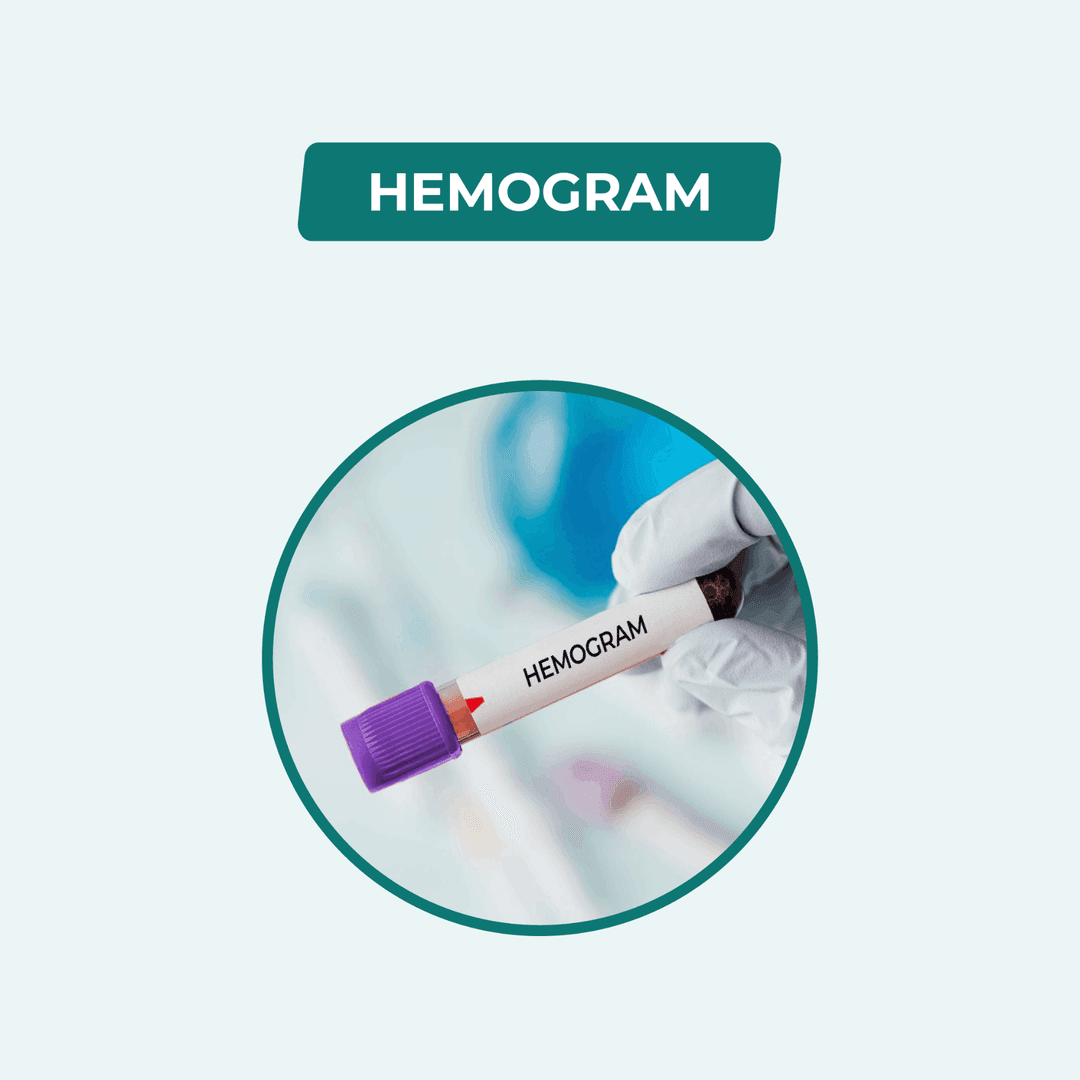
HEMOGRAM Red Blood Cells (RBC)


A hemogram is a comprehensive blood test that evaluates the overall health of your blood. It provides detailed information about different blood components, including red blood cells (RBCs), white blood cells (WBCs), hemoglobin, hematocrit, and platelets.

Covid Safety
Assured

Free Report
Counselling
Recommended for You


How our test process works!

A hemogram, commonly known as a Complete Blood Count (CBC), is a blood test used to evaluate your overall health and detect a variety of disorders, including anemia, infection, and other hematological conditions. It provides detailed information about the blood cells, including red blood cells (RBCs), white blood cells (WBCs), hemoglobin (Hb), hematocrit (HCT), and platelets.

Low Hemoglobin/HCT or RBCs: May indicate anemia, blood loss, or nutritional deficiencies (e.g., iron, B12, or folate).
High Hemoglobin/RBCs: May suggest dehydration, polycythemia, or lung disease.
Elevated WBC Count: Possible infection, inflammation, stress, or leukemia.
Low WBC Count: May indicate bone marrow suppression, autoimmune disorders, or severe infection.
Low Platelets (Thrombocytopenia): Risk of bleeding or bruising; could be due to autoimmune disorders or medications.
High Platelets (Thrombocytosis): Risk of clotting; may indicate inflammation, cancer, or a bone marrow disorder.

| Parameter | Normal Range (May vary slightly by lab) |
|---|---|
| Hemoglobin (Hb) | Male: 13.8–17.2 g/dL Female: 12.1–15.1 g/dL |
| Hematocrit (HCT) | Male: 41–50% Female: 36–44% |
| RBC Count | Male: 4.7–6.1 million/μL Female: 4.2–5.4 million/μL |
| WBC Count | 4,000–11,000 cells/μL |
| Platelet Count | 150,000–450,000/μL |
| Mean Corpuscular Volume (MCV) | 80–100 fL |
| Mean Corpuscular Hemoglobin (MCH) | 27–31 pg |
| Mean Corpuscular Hemoglobin Concentration (MCHC) | 32–36 g/dL |
| RDW (Red Cell Distribution Width) | 11.5–14.5% |
| Neutrophils | 40–70% |
| Lymphocytes | 20–40% |
| Monocytes | 2–8% |
| Eosinophils | 1–4% |
| Basophils | 0.5–1% |

Normal Range: Indicates good health unless symptoms or other tests suggest otherwise.
Out-of-Range Values: Require correlation with symptoms, medical history, and possibly additional diagnostic tests for proper interpretation.
Critical Values: Very low or high counts (e.g., extremely low WBCs or platelets) may require urgent medical attention.

A venous blood sample is collected from the arm using a syringe or vacuum-sealed tube.
Anticoagulant (EDTA) is used in the collection tube to prevent clotting.
Frequently Asked Question
HEMOGRAM
HEMOGRAM Red Blood Cells (RBC)


A hemogram is a comprehensive blood test that evaluates the overall health of your blood. It provides detailed information about different blood components, including red blood cells (RBCs), white blood cells (WBCs), hemoglobin, hematocrit, and platelets.
Covid Safety
Assured
Free Report
Counselling