
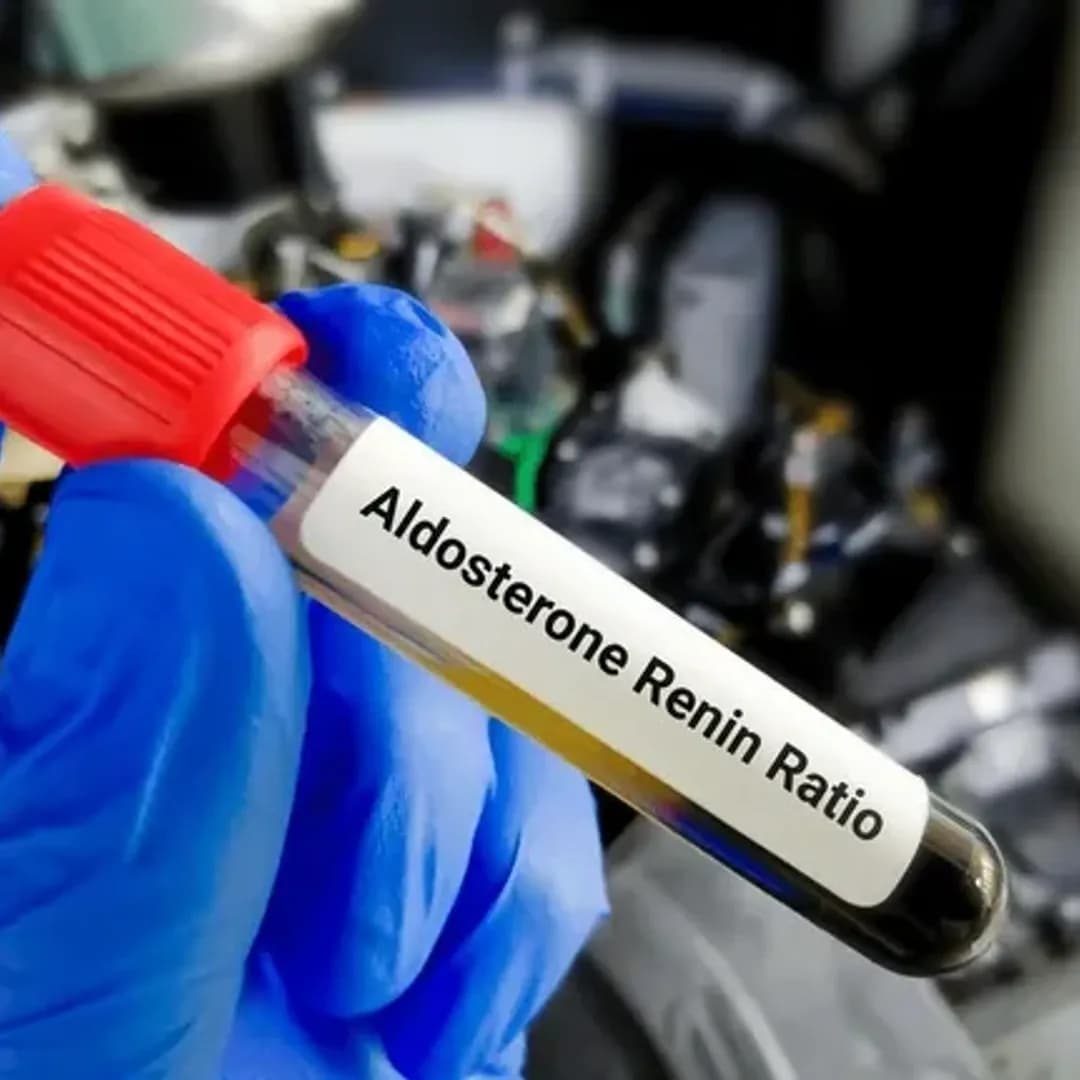
Aldosterone / Plasma Renin Direct Ratio


The Plasma Renin Direct Ratio (PRDR) test helps screen for primary aldosteronism, a condition causing high blood pressure and low potassium due to excess aldosterone. It measures the balance between aldosterone and renin in the blood, helping detect adrenal gland disorders. This test is often recommended for patients with resistant hypertension, early-onset high blood pressure, or unexplained low potassium levels.

Covid Safety
Assured

Free Report
Counselling
Recommended for You


How our test process works!

Overview
-
Purpose:
The Aldosterone/Renin Ratio (ARR) is primarily used to screen for Primary Aldosteronism (PA), also known as Conn's Syndrome — a condition where adrenal glands produce too much aldosterone, leading to hypertension and hypokalemia. -
Physiology:
-
Aldosterone regulates sodium and potassium levels and water retention, impacting blood pressure.
-
Renin is an enzyme that regulates aldosterone production through the renin-angiotensin-aldosterone system (RAAS).
-
When aldosterone is high and renin is low, it suggests autonomous aldosterone production (primary aldosteronism).

Risk Assessment (Clinical Considerations)
- Resistant hypertension (≥140/90 mmHg despite 3 drugs)
- Hypertension + Hypokalemia (spontaneous or diuretic-induced)
- Hypertension + adrenal incidentaloma
- Early-onset hypertension (<40 years)
- Family history of early hypertension or stroke
Factors affecting results:
-
-
Medications:
-
Some drugs interfere (e.g., beta-blockers ↓ renin, ACE inhibitors ↑ renin).
-
Ideally, adjust meds before testing if safe (e.g., switch to calcium channel blockers, alpha-blockers).
-
-
Potassium levels:
-
Hypokalemia can suppress aldosterone; correct potassium before testing.
-
-
Posture and Sodium Intake:
-
High sodium diet can suppress renin; low sodium diet can falsely elevate aldosterone.
-
-

Normal Range
-
Plasma Aldosterone:
-
Upright: 4–31 ng/dL (may vary slightly).
-
-
Plasma Renin Activity (PRA) or Direct Renin Concentration (DRC):
-
PRA: 0.65–5.0 ng/mL/hr (upright).
-
DRC: varies but often 5–35 mU/L (lab dependent).
-
-
Aldosterone/Renin Ratio (ARR):
-
Normal: ARR < 20–30 (depends on the renin assay unit).
-
Suspicious for Primary Aldosteronism:
-
ARR > 30–50 (with elevated aldosterone, low renin).
-
-

Interpretation
| Result | Suggestion |
| Low ARR | Normal OR secondary causes of increased renin (e.g., dehydration, heart failure) |
| High ARR | Suggests Primary Aldosteronism |
| High ARR + High Aldosterone (>15 ng/dL) | Stronger suspicion of PA; further confirmatory testing (e.g., saline infusion test, captopril challenge) needed |

Sample Type
-
Blood sample (plasma).
-
Collection details:
-
Preferably collected mid-morning.
-
Patient should ideally be seated for at least 15–30 minutes before sampling (some protocols use standing posture for 1–2 hours depending on local lab protocols).
-
Use EDTA tube (purple top tube) for plasma separation.
-
Frequently Asked Question
ALDOSTERONE / PLASMA RENIN DIRECT RATIO
Aldosterone / Plasma Renin Direct Ratio


The Plasma Renin Direct Ratio (PRDR) test helps screen for primary aldosteronism, a condition causing high blood pressure and low potassium due to excess aldosterone. It measures the balance between aldosterone and renin in the blood, helping detect adrenal gland disorders. This test is often recommended for patients with resistant hypertension, early-onset high blood pressure, or unexplained low potassium levels.
Covid Safety
Assured
Free Report
Counselling