

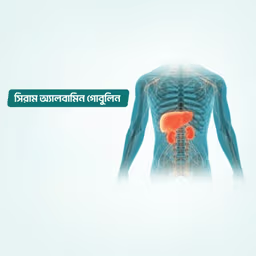
ALPHA1 ACID GLYCOPROTEIN is an acute-phase reactant protein that plays a role in modulating the immune response and has an impact on drug binding and distribution in the body.


Alpha-1 Acid Glycoprotein (AGP) is a glycoprotein produced mainly by the liver in response to inflammation, infection, or tissue injury. This test measures the concentration of AGP in the blood and is often used to assess inflammatory conditions, monitor disease activity, and track recovery from injury or infection.

Covid Safety
Assured

Free Report
Counselling
Recommended for You


How our test process works!

Overview:
Alpha-1 acid glycoprotein (AGP), also known as orosomucoid, is a glycoprotein produced primarily in the liver. It plays a role in the acute-phase response to inflammation and infection. The AGP test measures the concentration of AGP in the blood, often used to assess inflammation, infection, and certain medical conditions.

Risk Assessment: The test itself carries minimal risk. Blood collection typically involves a venipuncture (inserting a needle into a vein), which could cause:
- Bruising
- Bleeding
- Infection at the needle site
In certain rare cases, individuals with very thin veins or blood clotting disorders might have a slightly increased risk of complications.

Normal Range: The reference range for AGP levels in the blood can vary slightly depending on the laboratory, but typically it is:
- Normal range: 0.5 – 1.5 g/L (or 50 – 150 mg/dL).

Interpretation:
- Increased AGP levels are associated with:
- Acute and chronic inflammation
- Infection
- Autoimmune diseases (e.g., rheumatoid arthritis)
- Malignant conditions like cancer
- Pregnancy (as AGP levels rise naturally in the second and third trimesters)
- Decreased AGP levels can be seen in conditions like:
- Liver disease (due to impaired production)
- Nephrotic syndrome (a kidney disorder)
- Severe malnutrition.

Sample Type:
- Blood sample (serum or plasma) is required for the AGP test.
- The sample is usually collected through venipuncture.
Frequently Asked Question
ALPHA1 ACID GLYCOPROTEIN
ALPHA1 ACID GLYCOPROTEIN is an acute-phase reactant protein that plays a role in modulating the immune response and has an impact on drug binding and distribution in the body.


Alpha-1 Acid Glycoprotein (AGP) is a glycoprotein produced mainly by the liver in response to inflammation, infection, or tissue injury. This test measures the concentration of AGP in the blood and is often used to assess inflammatory conditions, monitor disease activity, and track recovery from injury or infection.
Covid Safety
Assured
Free Report
Counselling
