
Detects autoantibodies targeting smooth muscle – commonly used in diagnosing autoimmune hepatitis.


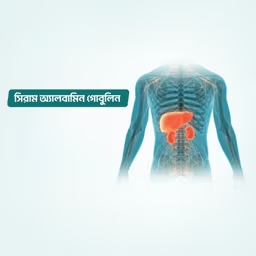
Anti-smooth muscle antibody is a blood test that detects the presence of antibodies against smooth muscle. The antibody is useful in making a diagnosis of autoimmune hepatitis. A blood sample is needed. This may be taken through a vein. The procedure is called a venipuncture. No special steps are needed to prepare for this test.

Covid Safety
Assured

Free Report
Counselling
Recommended for You


How our test process works!

Overview:
The Anti-Smooth Muscle Antibody (ASMA) test detects autoantibodies against smooth muscle fibers. It is primarily used to help diagnose autoimmune hepatitis and other autoimmune liver diseases.

Risk Assessment / Clinical Use:
- Suspected Autoimmune Hepatitis (especially Type 1)
- Chronic unexplained liver enzyme elevation
- To differentiate autoimmune hepatitis from other liver conditions
- May also be seen in:
-
-
Primary biliary cholangitis
-
Viral hepatitis
-
Some connective tissue diseases
-

Normal Range:
-
Negative: <1:20 (titer) or as per lab reference
-
Borderline/low positive results should be clinically correlated.

Interpretation:
-
Positive ASMA: Suggests autoimmune hepatitis (especially if high titer), but must be interpreted with clinical and other lab findings.
-
Negative ASMA: Makes autoimmune hepatitis less likely, though not completely ruled out.

Sample Type:
-
Blood sample (serum)
Frequently Asked Question
Anti Smooth Muscle Antibody (ASMA)
Detects autoantibodies targeting smooth muscle – commonly used in diagnosing autoimmune hepatitis.


Anti-smooth muscle antibody is a blood test that detects the presence of antibodies against smooth muscle. The antibody is useful in making a diagnosis of autoimmune hepatitis. A blood sample is needed. This may be taken through a vein. The procedure is called a venipuncture. No special steps are needed to prepare for this test.
Covid Safety
Assured
Free Report
Counselling