
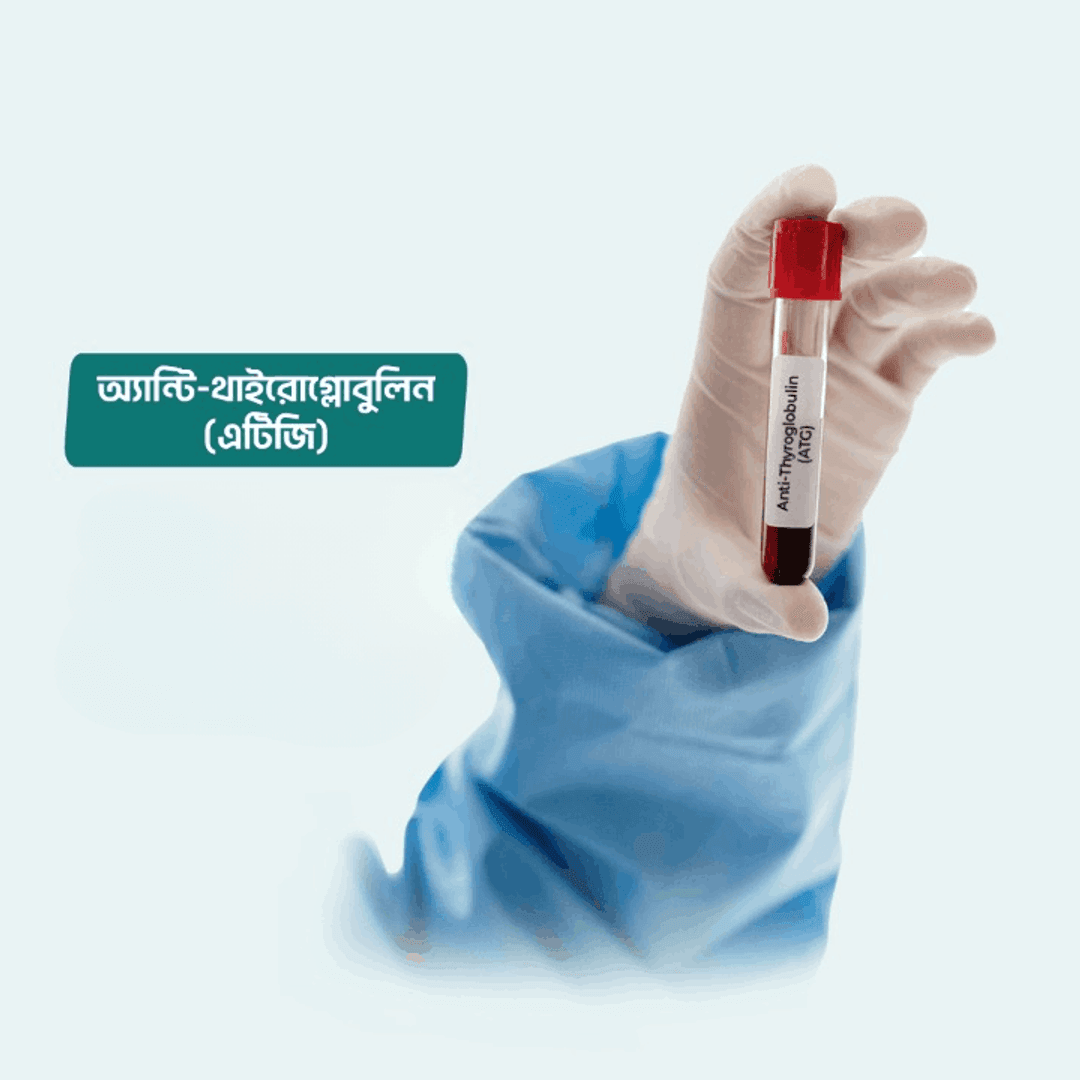
Assessing Thyroid Health through Anti-Thyroglobulin Antibody Testing


Antithyroglobulin antibody is a test to measure antibodies to a protein called thyroglobulin. This protein is found in thyroid cells, but a small amount leaks out into the bloodstream. Sometimes the immune system produces antibodies against this protein.

Covid Safety
Assured

Free Report
Counselling
Recommended for You


How our test process works!

Overview
The Anti-Thyroglobulin (Anti-Tg) test measures the presence of autoantibodies against thyroglobulin (Tg), a protein produced by the thyroid gland. These antibodies are often elevated in autoimmune thyroid disorders like Hashimoto’s thyroiditis and Graves’ disease.

Risk Assessment
Indications for Testing:
- Autoimmune thyroid diseases (Hashimoto’s thyroiditis, Graves’ disease)
- Thyroid cancer follow-up (especially after thyroidectomy or radioactive iodine therapy)
- Unexplained hypothyroidism or hyperthyroidism
- Goiter or thyroid nodules
- Monitoring recurrence in differentiated thyroid cancer
Risk Factors for Positive Anti-Tg Antibodies:
- Autoimmune conditions (e.g., Type 1 diabetes, Addison’s disease)
- Family history of thyroid disorders
- Women (higher prevalence than men)
- Older age

Normal Range
- Anti-Tg Antibody Level: Usually < 4 IU/mL (Varies by lab)
- Elevated Levels: > 4 IU/mL (may indicate autoimmune thyroid disease)
Laboratory variations: Some labs use different units (e.g., IU/mL, ng/mL), so always compare with reference ranges provided by the testing lab.

Interpretation of Anti-Tg Results
- Negative / Normal: No significant autoimmune thyroid disease.
- Mildly Elevated: Could indicate early autoimmune thyroid disease or other inflammatory conditions.
- Significantly Elevated: Suggests Hashimoto’s thyroiditis, Graves’ disease, or thyroid cancer recurrence.
Note: Anti-Tg alone is not diagnostic; it should be interpreted with TSH, Free T4, Free T3, and Anti-TPO antibodies.

Sample Type
- Specimen: Venous blood sample
- Tube Type: Serum (Red-top or SST tube)
- Fasting Required? No fasting is required.
Frequently Asked Question
Anti Thyroglobulin (ATG)
Assessing Thyroid Health through Anti-Thyroglobulin Antibody Testing


Antithyroglobulin antibody is a test to measure antibodies to a protein called thyroglobulin. This protein is found in thyroid cells, but a small amount leaks out into the bloodstream. Sometimes the immune system produces antibodies against this protein.
Covid Safety
Assured
Free Report
Counselling
