
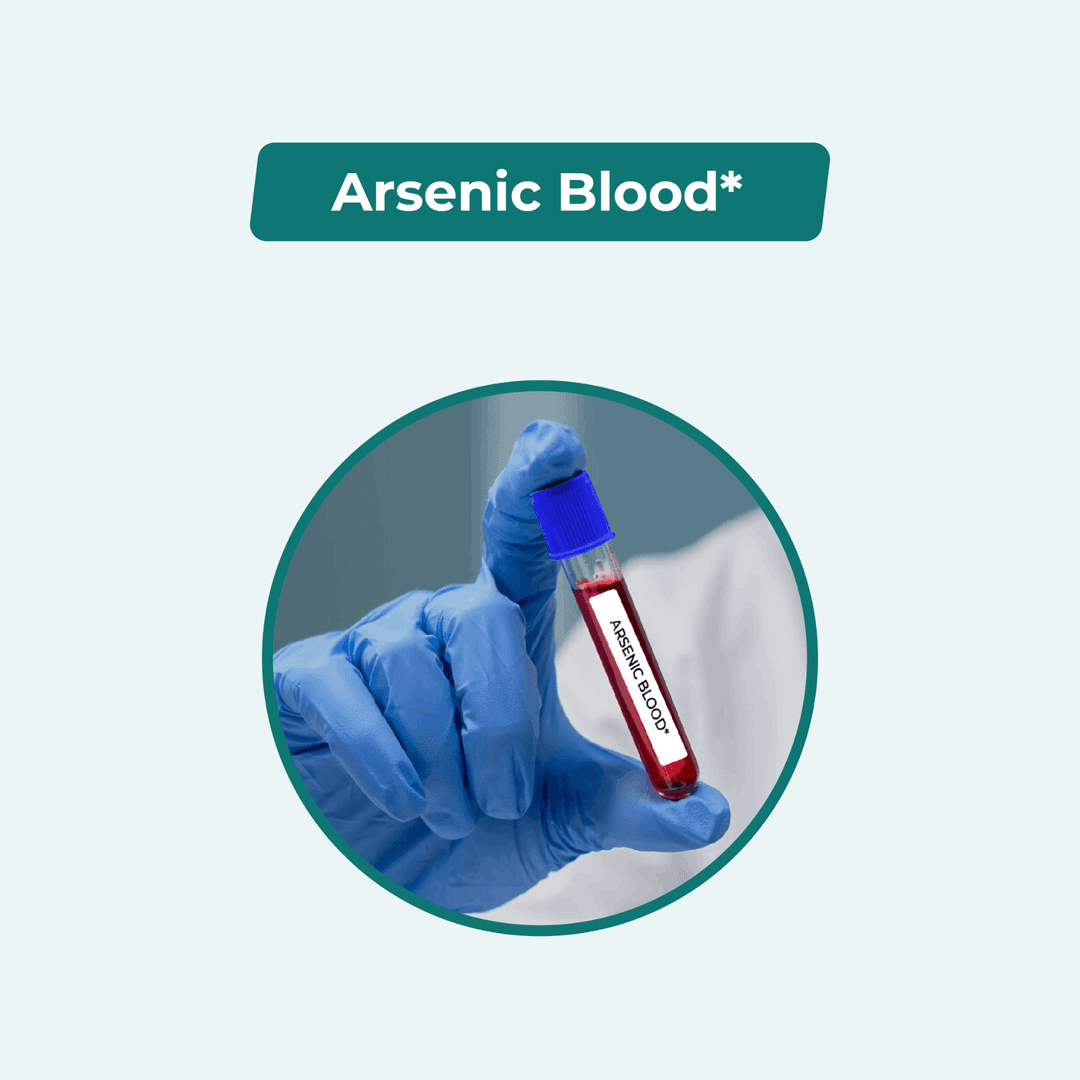
Detection of arsenic levels in blood for toxicity assessment.


The Arsenic Blood Test measures the level of arsenic in the bloodstream to assess potential exposure to arsenic from environmental, occupational, or dietary sources. Special Instruction : Avoid seafood and herbal supplements for 3 days before sample collection. If gadolinium or iodine-based contrast was used, wait 96 hours before collecting the specimen.

Covid Safety
Assured

Free Report
Counselling
Recommended for You


How our test process works!

Overview
The Arsenic Blood Test measures the concentration of arsenic in the bloodstream to assess exposure to arsenic, a toxic heavy metal. This test is primarily used for detecting recent (acute) exposure, as arsenic is quickly cleared from the blood within 24–48 hours and accumulates in urine, hair, and nails over time.

Risk Assessment
Arsenic exposure can occur through:
- Contaminated drinking water (especially from well water in certain regions).
- Occupational exposure (mining, smelting, agriculture, glass, and semiconductor industries).
- Seafood consumption (organic arsenic in fish is non-toxic but can elevate test results).
- Pesticides and herbicides (previously used in agriculture).
- Tobacco smoke (some cigarettes contain arsenic-based chemicals).
Health Risks of Arsenic Exposure:
- Acute poisoning: Nausea, vomiting, diarrhea, abdominal pain, muscle cramps.
- Chronic exposure: Skin changes, peripheral neuropathy, cardiovascular disease, kidney and liver damage, increased cancer risk.

Normal range: Usually <10 µg/L (micrograms per liter) in blood.

Test Interpretation
- Normal range: Usually <10 µg/L (micrograms per liter) in blood.
- Mildly elevated (10–50 µg/L): May indicate recent seafood ingestion. Follow-up urine testing is recommended to differentiate toxic vs. organic arsenic.
- Moderate to high levels (>50 µg/L): Suggests significant recent exposure and potential toxicity.
- Severe toxicity (>100 µg/L): Can be life-threatening and requires immediate medical attention.

Sample Type
- Blood sample (venous draw)
- Requires no seafood consumption for at least 48 hours before testing to avoid false positives from non-toxic organic arsenic.
Frequently Asked Question
Arsenic Blood
Detection of arsenic levels in blood for toxicity assessment.


The Arsenic Blood Test measures the level of arsenic in the bloodstream to assess potential exposure to arsenic from environmental, occupational, or dietary sources. Special Instruction : Avoid seafood and herbal supplements for 3 days before sample collection. If gadolinium or iodine-based contrast was used, wait 96 hours before collecting the specimen.
Covid Safety
Assured
Free Report
Counselling