
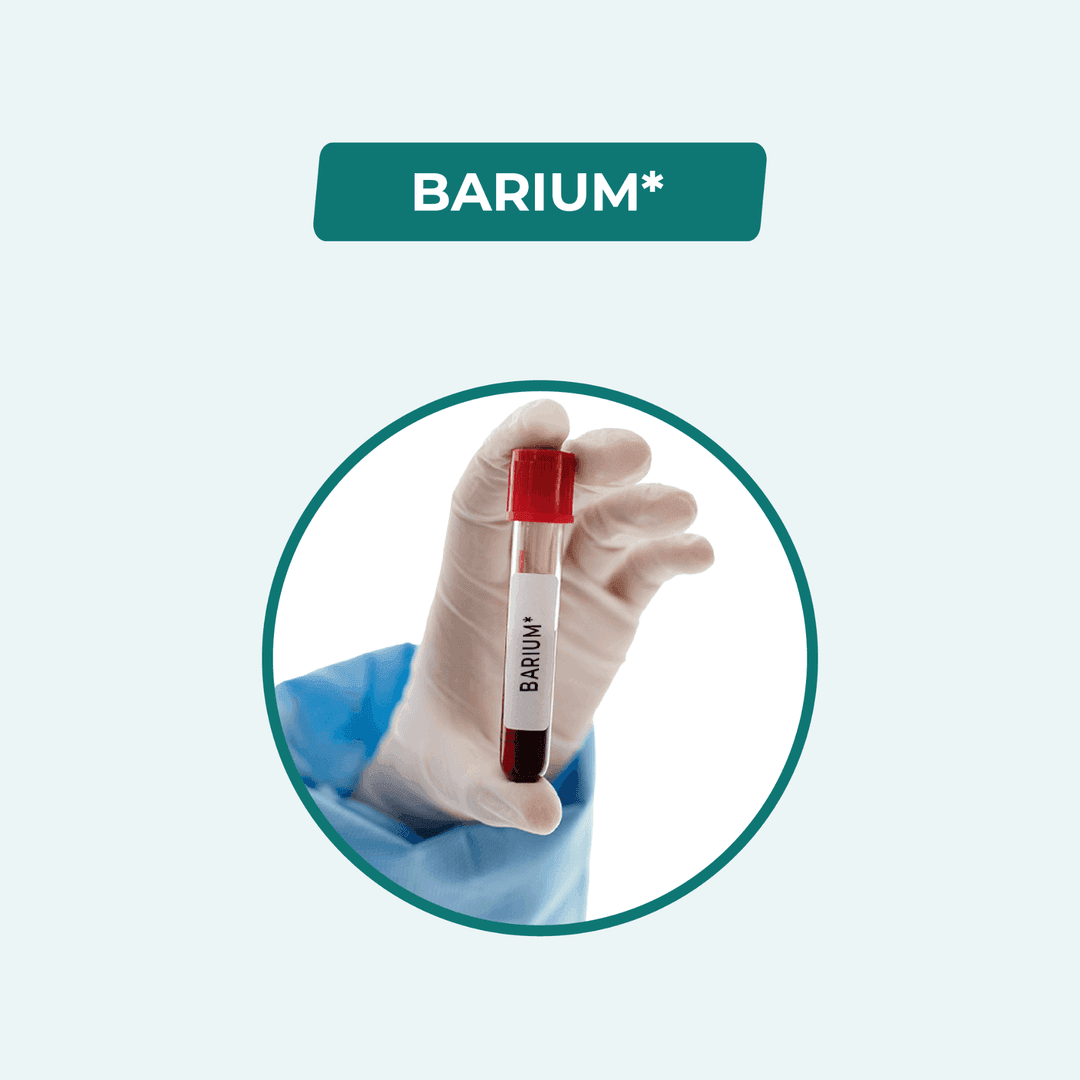
Barium Test: Blood and Urine Analysis for Monitoring Barium Levels.


A Barium test in blood and urine is used to measure the levels of barium in the body. Barium is a heavy metal that, in excessive amounts, can be toxic. This test helps assess exposure to barium, often from industrial sources, contaminated food or water, or medical contrast agents. Subtypes: Barium Blood Test – Measures barium levels in the bloodstream. Barium Urine Test – Detects recent exposure by measuring the excretion of barium in urine.

Covid Safety
Assured

Free Report
Counselling
Recommended for You


How our test process works!

Overview:
Barium is not naturally present in high concentrations in the body. The test may be done if there is suspicion of barium poisoning or excessive exposure, which can occur through ingestion of contaminated water, food, or from industrial or environmental exposure.

Risk Assessment:
Barium poisoning can be dangerous, and its effects depend on the amount of exposure. Risk factors include:
- Ingesting large amounts of barium (through contaminated food, water, or industrial accidents).
- Inhalation of barium dust.
- Occupational exposure in mining or industrial settings.
- Medical procedures (if barium is improperly administered).
The symptoms of barium poisoning may include:
- Abdominal pain
- Vomiting
- Diarrhea
- Muscle weakness
- Respiratory difficulties
- Cardiac issues (due to electrolyte disturbances).

Normal Range:
- Blood (Serum): Typically, barium levels in the blood should be undetectable or very low. There isn’t a widely accepted reference range for blood levels because they are generally expected to be near zero under normal circumstances.
- Urine: Normal urine levels are also usually very low or undetectable unless there has been significant exposure.

Interpretation:
- Elevated levels of barium in the blood or urine indicate possible poisoning or high exposure. Immediate medical intervention may be necessary.
- Low to undetectable levels are typical in healthy individuals with no significant exposure.
Risks of the Test:
- For blood tests: There’s the usual risk of infection or hematoma from the needle insertion.
- For urine tests: Minimal risk, but there may be some discomfort from collection.

Sample Types:
- Blood test (Serum): A blood sample is collected to check the concentration of barium in the bloodstream.
- Urine test: A urine sample can also be tested to detect the amount of barium excreted by the kidneys.
Frequently Asked Question
BARIUM
Barium Test: Blood and Urine Analysis for Monitoring Barium Levels.


A Barium test in blood and urine is used to measure the levels of barium in the body. Barium is a heavy metal that, in excessive amounts, can be toxic. This test helps assess exposure to barium, often from industrial sources, contaminated food or water, or medical contrast agents. Subtypes: Barium Blood Test – Measures barium levels in the bloodstream. Barium Urine Test – Detects recent exposure by measuring the excretion of barium in urine.
Covid Safety
Assured
Free Report
Counselling