
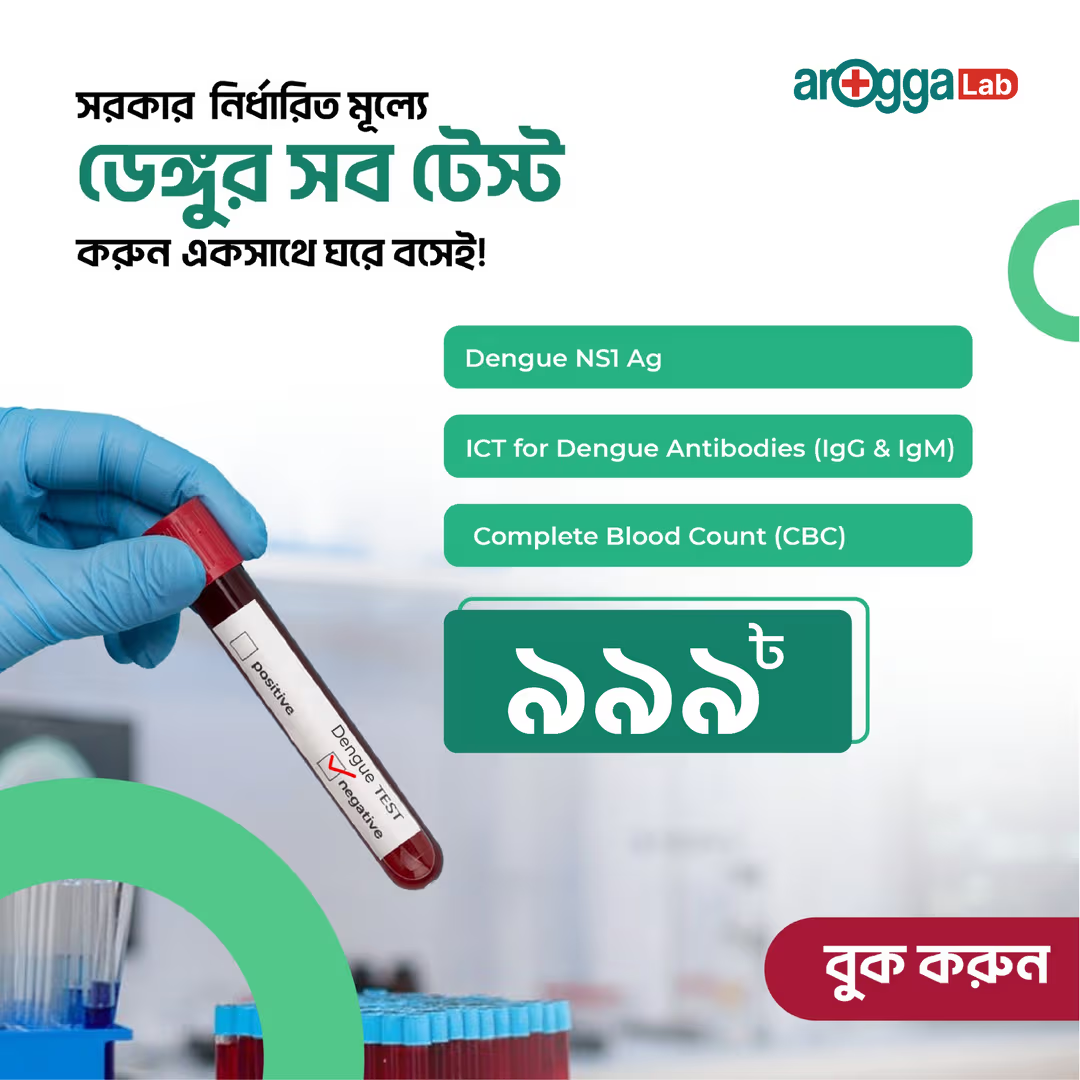
Rapid Detection and evaluation for Dengue


- Dengue NS1 Ag
- ICT for Dengue Antibodies: (IgG & IgM)
- CBC
A Dengue test detects the virus spread by Aedes mosquitoes, crucial for diagnosing Dengue fever. The NS1 antigen test identifies the virus early (1-5 days) with rapid results. The IgM/IgG antibody tests detect immune responses, indicating recent or past infections. The PCR test detects the virus's RNA for early diagnosis. All tests require a blood sample, with results ranging from hours to a few days. They confirm Dengue, rule out similar infections, and help monitor the disease's progression. These tests are vital in managing Dengue, especially in endemic areas.

Covid Safety
Assured

Free Report
Counselling
Recommended for You


How our test process works!

Dengue is a mosquito-borne viral infection caused by the Dengue virus (DENV), which has four serotypes (DENV-1, DENV-2, DENV-3, and DENV-4). Dengue tests are conducted to diagnose infection and differentiate it from other febrile illnesses, especially in endemic regions.
There are several types of tests available for diagnosing dengue, including:
-
NS1 Antigen Test
Detects the Non-structural protein 1 (NS1) of the virus, which is present during the early stages of infection. -
Dengue IgM/IgG Antibody Test
Detects antibodies produced by the body in response to the virus.- IgM antibodies indicate a recent infection.
- IgG antibodies indicate a past or secondary infection.
-
PCR (Polymerase Chain Reaction)
Identifies the viral RNA and is useful for early diagnosis and typing of the virus. -
Complete Blood Count (CBC)
Used to monitor platelet levels and white blood cell counts, which may drop during infection.

Dengue Test Risk Assessment
- High-risk individuals include those living in or traveling to dengue-endemic areas (tropical and subtropical regions).
- Symptoms of dengue infection that may prompt testing include:
- High fever
- Severe headache
- Pain behind the eyes
- Joint and muscle pain
- Nausea, vomiting
- Skin rashes
- Bleeding tendencies (nose, gums, bruising)
The risk of severe dengue (Dengue Hemorrhagic Fever or Dengue Shock Syndrome) is higher in:
- Individuals with a previous dengue infection
- Infants and the elderly
- Individuals with compromised immune systems

Normal Range (Interpretation)
-
NS1 Antigen Test:
Negative result indicates no presence of NS1 protein (no current infection).
Positive result indicates a current infection, especially in the early phase (0-7 days after symptom onset). -
Dengue IgM/IgG Antibodies:
IgM Negative: No recent dengue infection.
IgM Positive: Indicates recent or active dengue infection, usually detectable from 4-5 days post-symptom onset.
IgG Positive: Indicates past infection or secondary dengue infection. -
Complete Blood Count (CBC):
- Platelet count: Dengue infection often causes thrombocytopenia (low platelet count). Normal platelet count ranges between 150,000 and 450,000 platelets per microliter.
- White blood cell count (WBC): Dengue can cause leukopenia (low white blood cell count). Normal WBC count is between 4,000 and 11,000 cells per microliter.
-
PCR Test:
Negative result indicates no detectable viral RNA (no active viral replication).
Positive result confirms active dengue infection, useful during the early acute phase of the disease.

Test Interpretation
- NS1 Positive, IgM Negative: Early-stage infection (within the first few days of symptoms).
- IgM Positive, IgG Negative: Recent or primary infection.
- IgM Positive, IgG Positive: Possible late-phase primary infection or early-stage secondary infection.
- IgM Negative, IgG Positive: Past infection or secondary infection.
- PCR Positive: Active infection, typically detected in the first 5-7 days after symptom onset.

Sample Type
- Blood sample (serum or plasma) is typically used for dengue testing.
- Venous blood is collected using standard phlebotomy techniques.
- NS1 antigen and antibody tests are typically performed using blood serum or plasma.
- PCR also requires a blood sample for viral RNA detection.
Frequently Asked Question
Dengue Package
Rapid Detection and evaluation for Dengue


- Dengue NS1 Ag
- ICT for Dengue Antibodies: (IgG & IgM)
- CBC
A Dengue test detects the virus spread by Aedes mosquitoes, crucial for diagnosing Dengue fever. The NS1 antigen test identifies the virus early (1-5 days) with rapid results. The IgM/IgG antibody tests detect immune responses, indicating recent or past infections. The PCR test detects the virus's RNA for early diagnosis. All tests require a blood sample, with results ranging from hours to a few days. They confirm Dengue, rule out similar infections, and help monitor the disease's progression. These tests are vital in managing Dengue, especially in endemic areas.
Covid Safety
Assured
Free Report
Counselling
