
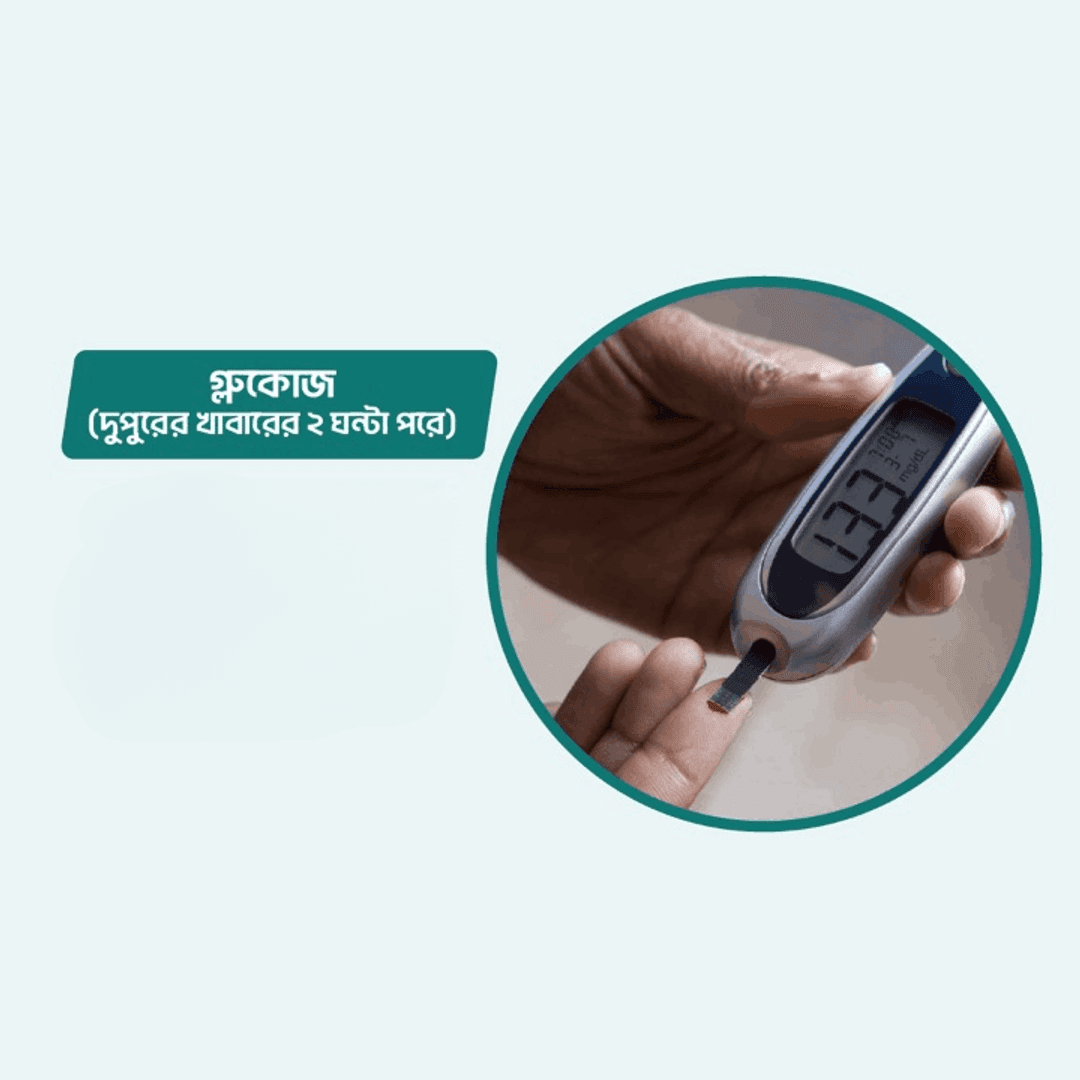
Measures blood glucose level two hours after eating to assess glucose metabolism and diabetes control.


This test assesses how efficiently the body utilizes glucose after eating. It helps detect diabetes mellitus, monitor glucose tolerance, and evaluate treatment effectiveness in diabetic patients. A blood sample is collected exactly two hours after a regular meal or glucose intake.

Covid Safety
Assured

Free Report
Counselling
Recommended for You


How our test process works!

Overview:
The 2 Hours After Meal test measures the level of glucose in the blood exactly two hours after eating. It helps evaluate how the body processes sugar after a meal and is commonly used to diagnose or monitor diabetes and glucose intolerance.

Risk Assessment / Indications:
-
Screening and monitoring of diabetes mellitus.
-
Evaluation of impaired glucose tolerance (prediabetes).
-
Assessment of treatment effectiveness in diabetic patients.
-
Helpful in detecting reactive hypoglycemia (low blood sugar after eating).

Normal Range (for non-diabetic adults):
-
< 140 mg/dL (7.8 mmol/L) → Normal
-
140–199 mg/dL (7.8–11.0 mmol/L) → Impaired Glucose Tolerance (Prediabetes)
-
≥ 200 mg/dL (≥ 11.1 mmol/L) → Diabetes Mellitus

Interpretation:
-
Normal: Efficient insulin response; normal glucose metabolism.
-
Borderline / Prediabetes: Partial insulin resistance or decreased insulin sensitivity.
-
High (≥200 mg/dL): Suggestive of diabetes; requires confirmation with fasting or HbA1c test.

Sample Type:
Venous blood sample (serum or plasma).
Frequently Asked Question
Glucose (2 Hours After Lunch)/2 Hours After Meal
Measures blood glucose level two hours after eating to assess glucose metabolism and diabetes control.


This test assesses how efficiently the body utilizes glucose after eating. It helps detect diabetes mellitus, monitor glucose tolerance, and evaluate treatment effectiveness in diabetic patients. A blood sample is collected exactly two hours after a regular meal or glucose intake.
Covid Safety
Assured
Free Report
Counselling
