
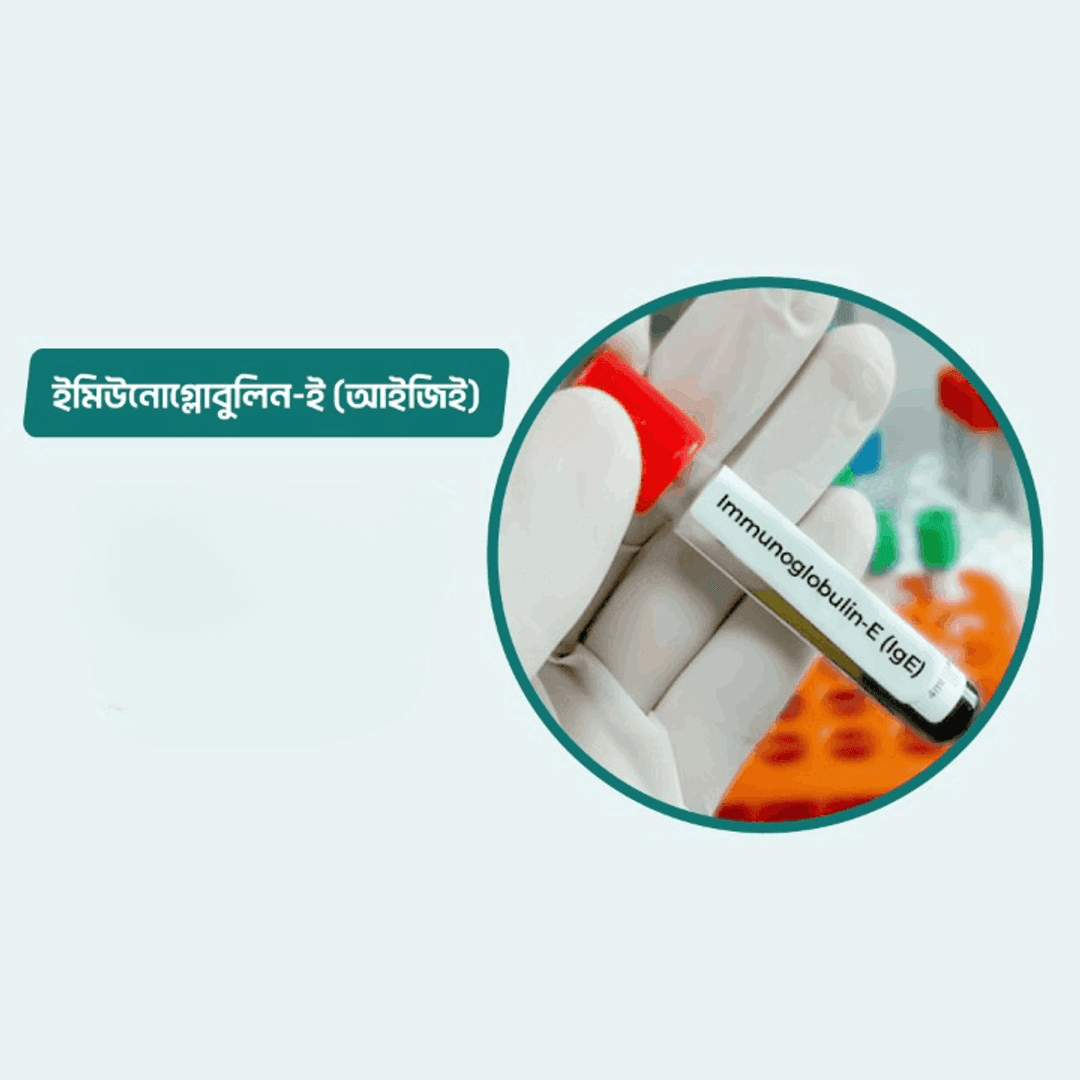
Assessing Allergen-Specific Antibodies for Comprehensive Immune and Allergy Health Insight


The blood usually has small amounts of IgE antibodies. Higher amounts can be a sign that the body overreacts to allergens, which can lead to an allergic reaction. IgE levels can also be high when the body is fighting an infection from a parasite and from some immune system conditions.

Covid Safety
Assured

Free Report
Counselling
Recommended for You


How our test process works!

Overview:
The IgE test measures the amount of Immunoglobulin E in the blood. IgE is an antibody produced by the immune system in response to allergens (e.g., pollen, dust, food, or insect stings). This test helps diagnose allergic conditions, asthma, or parasitic infections.
Purpose / Indication:
- Evaluate allergic reactions (e.g., hay fever, eczema, asthma, food allergies).
- Diagnose parasitic infections.
- Support diagnosis of immunodeficiency or hyper-IgE syndrome.

Risk Assessment:
-
Minimal risk (standard blood draw risk: pain, bruising, slight bleeding, or infection).
-
No specific preparation or fasting is typically needed.

Normal Range:
-
Adults: < 100–150 IU/mL (varies by lab)
-
Children: Often higher, age-dependent
(Note: Slight elevations can occur in non-allergic conditions as well.)

Interpretation:
- Elevated IgE: Suggests an allergic condition, parasitic infection, or sometimes autoimmune disease or malignancy.
- Normal IgE: Does not rule out allergy (some patients have normal IgE with allergic symptoms).
- Very high IgE: Consider hyper-IgE syndrome, parasitic infestation, or severe atopy.

Sample Type:
-
Serum from a blood sample (venipuncture)
Frequently Asked Question
Immunoglobulin-E (IgE)
Assessing Allergen-Specific Antibodies for Comprehensive Immune and Allergy Health Insight


The blood usually has small amounts of IgE antibodies. Higher amounts can be a sign that the body overreacts to allergens, which can lead to an allergic reaction. IgE levels can also be high when the body is fighting an infection from a parasite and from some immune system conditions.
Covid Safety
Assured
Free Report
Counselling
