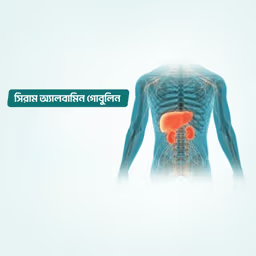
One of the body's vital organs is the liver. It carries out a number of tasks, such as protein synthesis, detoxification, and the synthesis of biochemicals necessary for digestion. It so renders the liver vulnerable to numerous ailments. Therefore, it is essential to have liver function tests (LFT) performed for routine checkups, to look into liver illnesses, or both.
A range of liver function tests are available to evaluate blood proteins and enzyme levels. Variations in these LFT test results signify abnormalities in the liver.
Jaundice, Anaemia, Cirrhosis, Gallbladder disease
Test result interpretation
Alanine transaminase (SGPT/ALT) - <35 units per litre (U/L)
Aspartate transaminase (SGOT/AST) - 17-59 units per litre (U/L)
Alkaline phosphatase (ALT) - 38 – 126 units per litre (U/L)
Gamma-glutamyl transferase (GGT) - 15 – 73 units per litre (U/L)
Albumin - 3.5 – 5 grams per deciliter (g/dL)
Globulin - 2- 3.5 grams per deciliter (g/dL)
Bilirubin - Total - 0.2 – 1.2 milligrams per deciliter (mg/dL)
Bilirubin - Direct- 0- 0.3 milligrams per deciliter (mg/dL)
Bilirubin - Indirect - 0- 1.10 milligrams per deciliter (mg/dL)
A/G Ratio - 0.8- 1.2
The analysis of a blood sample is the basis for the liver function test results. A single sample is used for each test under the liver function test.
Test Preparation
For the liver function test, a blood sample that has been fasted for 10 to 12 hours may be needed. Taking a blood sample from a vein is the standard procedure for doing so. A person's vein in their forearm is the most noticeable. Typically, the LFT process takes five to ten minutes. After the test, you can carry on with your regular activities.
Parameters considered in the test: What are they?
The following parameters are included in the liver function test:
Transaminases
The liver contains significant amounts of the enzymes aspartate (AST or SGOT) and alanine (ALT or SGPT). The liver is the primary organ where ALT is found. On the other hand, AST is an enzyme secreted by the kidney, liver, heart, and skeletal muscle.
Damage to the tissues that produce ALT and SGOT raises their serum levels. Serum SGPT estimation is therefore unique to liver disorders. On the other hand, if there is damage to the liver or muscles, SGOT levels may increase.
Gamma-Glutamyl Transpeptidase (GGT)
The liver is the main source of this enzyme. Liver disorders including cholestasis, a condition where bile flow from the liver is obstructed or interrupted, are associated with elevated GGT. GGT levels are frequently elevated in patients who abuse alcohol.
Albumin
The liver is where the protein known as albumin is made. It carries out a number of tasks, including supplying tissues with nutrition and moving chemicals like vitamins, hormones, and drugs. When there is significant liver illness or injury, the blood's albumin level drops.
Bilirubin
The waste substance known as bilirubin is produced by the liver following the lysis of red blood cells. The liver excretes bilirubin through the stools. An increased bilirubin level is indicative of anemia or liver injury.
Alkaline Phosphatase (ALP):
The liver, gut, bone, and placenta all contain serum alkaline phosphatase. Elevated levels of ALP can indicate neoplastic, infiltrative, and granulomatous liver disorders, pregnancy, bone regeneration, and cholestasis (partial or total bile duct obstruction).
Globulin
Albumin/Globulin Ratio
Proteins
SGOT/SGPT Ratio
To evaluate liver damage, illness, or functionality, a large range of indicators are employed. Nonetheless, the above-mentioned indicators are often utilized. These LFT readings assess the degree of liver damage or disease and give an indication of how well the liver is functioning. There is no positive or negative expression for the liver function test result. A liver issue is indicated if the number is on the higher or lower end.