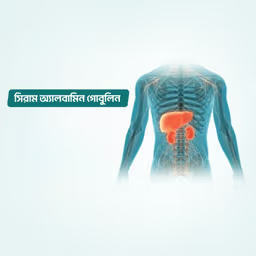
One of the body's vital organs is the liver. It carries out a number of tasks, such as protein synthesis, detoxification, and the synthesis of biochemicals necessary for digestion. It so renders the liver vulnerable to numerous ailments. Therefore, it is essential to have liver function tests (LFT) performed for routine checkups, to look into liver illnesses, or both.
A range of liver function tests are available to evaluate blood proteins and enzyme levels. Variations in these LFT test results signify abnormalities in the liver.
Other names of liver function test
Liver panel
Liver function panel
Liver profile hepatic function panel
Hepatic function test
Liver profile
Liver function evaluation
LFT
For whom is the liver function test recommended, and what does it assess or detect?
The following enzymes are typically measured by the liver function test: bilirubin, serum albumin, prothrombin time (PT), alkaline phosphatase (ALT), aspartate transaminase (SGOT/AST), gamma-glutamyl transferase (GGT), and aspartate transaminase (SGPT/ALT).
If you are experiencing any of the symptoms listed below, or any other symptoms of a liver condition, your doctor may ask for a liver function test.
Abdominal pain
Weight loss
Nausea
Diarrhoea
Lack of energy or fatigue
Jaundice
Abnormal bleeding
Vomiting
Fluid retention
Dark-coloured urine
Light-coloured stools
Some diseases for which a doctor can prescribe liver function tests are:
Jaundice
Hepatitis
Cirrhosis
Fatty liver
Chronic alcoholic liver disease
Once the condition has been diagnosed, the hematologist or MD starts treating liver disease.
The results of the LFT test may help your treating physician assess how your treatment is progressing and adjust or control your medication if needed.
Both adults and children, males and females, are subject to the liver function test. You should let your doctor know if you take blood thinners since they may cause an increase in prothrombin time (PT). Additionally, provide a detailed inventory of all the current drugs. In order to assess your fitness for surgery, a pre-surgery test profile includes a liver function test.
Jaundice, Anaemia, Cirrhosis, Gallbladder disease
Alanine transaminase (SGPT/ALT) - <35 units per litre (U/L)
Aspartate transaminase (SGOT/AST) - 17-59 units per litre (U/L)
Alkaline phosphatase (ALT) - 38 – 126 units per litre (U/L)
Gamma-glutamyl transferase (GGT) - 15 – 73 units per litre (U/L)
Albumin - 3.5 – 5 grams per deciliter (g/dL)
Globulin - 2- 3.5 grams per deciliter (g/dL)
Bilirubin (Total) - 0.2 – 1.2 milligrams per deciliter (mg/dL)
Bilirubin - Direct - 0- 0.3 milligrams per deciliter (mg/dL)
Bilirubin - Indirect - 0- 1.10 milligrams per deciliter (mg/dL)
A/G Ratio - 0.8- 1.2
Test result interpretation
An abnormal liver function test biomarker or biomarkers may point to liver illness or injury. Numerous illnesses, including diabetes, liver cirrhosis, hepatitis, alcoholic liver disease, liver cancer, and jaundice, can harm the liver.
The test result might not be able to identify the exact ailment, but it might suggest liver damage or disease. However, it does assist your doctor in deciding what to do next.
Your doctor will urge you to give up alcohol if you drink heavily. Alternatively, in the event that your doctor prescribes any drug that raises liver biomarkers, they may replace it or cease it altogether.
Your physician may choose to undertake additional testing to rule out hepatitis or other illnesses or infections that could damage your liver. They can suggest a liver biopsy or urge you to have imaging tests like a CT scan or ultrasound (USG).
The analysis of a blood sample is the basis for the liver function test results. A single sample is used for each test under the liver function test.
Test Preparation
For the liver function test, a blood sample that has been fasted for 10 to 12 hours may be needed. Taking a blood sample from a vein is the standard procedure for doing so. A person's vein in their forearm is the most noticeable. Typically, the LFT process takes five to ten minutes. After the test, you can carry on with your regular activities.
Test inclusions: What parameters are included?
The liver function test includes the following parameters:
Transaminases
The liver contains significant amounts of the enzymes aspartate (AST or SGOT) and alanine (ALT or SGPT). The liver is the primary organ where ALT is found. On the other hand, AST is an enzyme secreted by the kidney, liver, heart, and skeletal muscle.
Damage to the tissues that produce ALT and SGOT raises their serum levels. Serum SGPT estimation is therefore unique to liver disorders. On the other hand, if there is damage to the liver or muscles, SGOT levels may increase.
Gamma-Glutamyl Transpeptidase (GGT)
The liver is the main source of this enzyme. Liver disorders including cholestasis, a condition where bile flow from the liver is obstructed or interrupted, are associated with elevated GGT. GGT levels are frequently elevated in patients who abuse alcohol.
Albumin
The protein called albumin is produced in the liver. It performs a variety of functions, such as transporting compounds like vitamins, hormones, and medications and providing tissues with nourishment. The blood's albumin level decreases in cases of serious liver disease or damage.
Bilirubin
The waste substance known as bilirubin is produced by the liver following the lysis of red blood cells. The liver excretes bilirubin through the stools. A high bilirubin level is indicative of anemia in particular forms or liver injury.
Alkaline Phosphatase (ALP)
There is serum alkaline phosphatase in the gut, liver, and placenta. Elevated ALP levels may indicate neoplastic, infiltrative, and granulomatous liver disorders, bone regeneration, cholestasis (partial or complete bile duct obstruction), and pregnancy.
Globulin
Albumin/Globulin Ratio
Proteins
SGOT/SGPT Ratio
To evaluate liver damage, illness, or functionality, a large range of indicators are employed. Nonetheless, the above-mentioned indicators are often utilized. These LFT readings assess the degree of liver damage or disease and give an indication of how well the liver is functioning. There is no positive or negative expression for the liver function test result. A liver issue is indicated if the number is on the higher or lower end.