
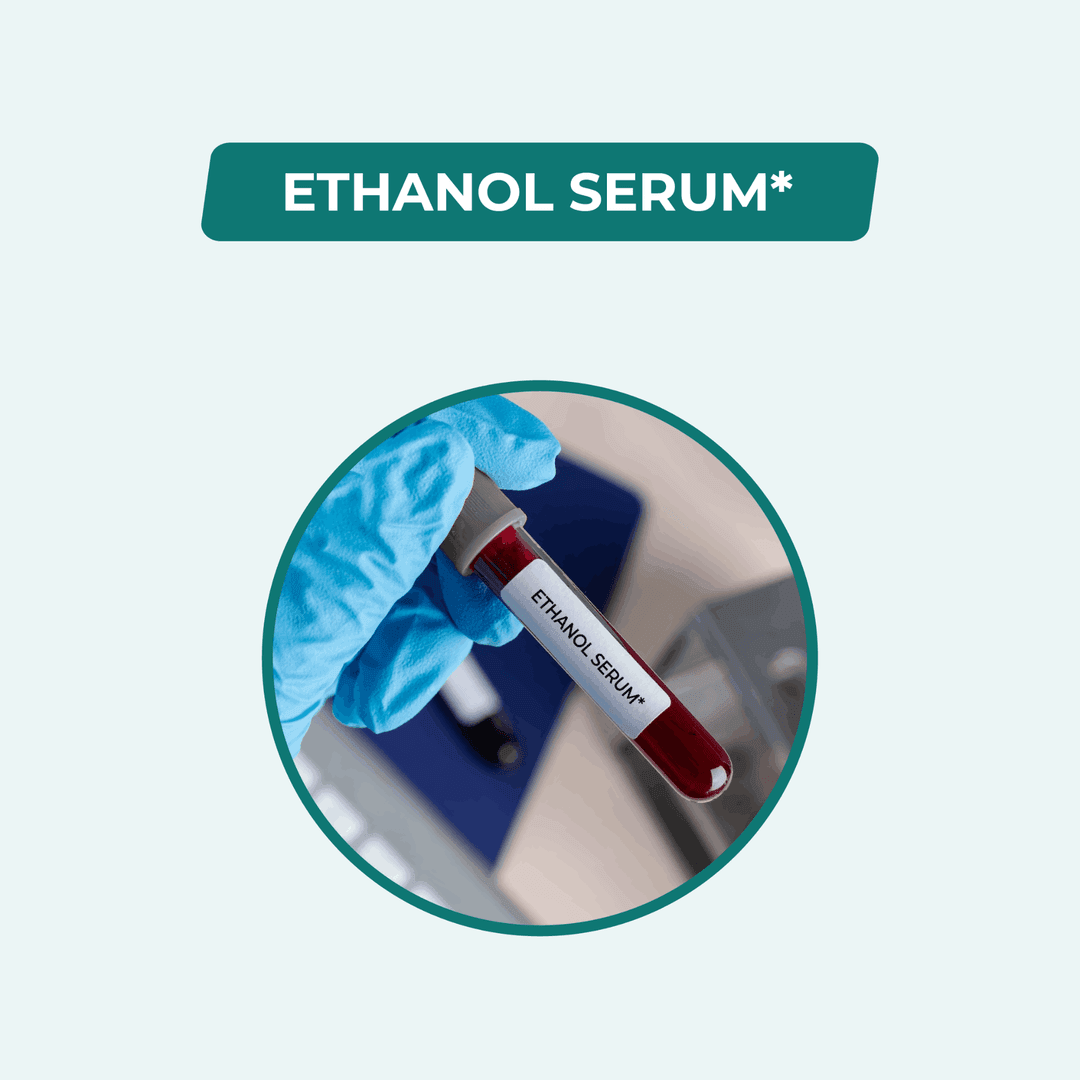
Serum ethanol levels may be ordered in suspected alcohol ingestion


A blood alcohol test measures the amount of alcohol (ethanol) in your body. Alcohol is quickly absorbed into the blood and can be measured within minutes of having an alcoholic drink. The amount of alcohol in the blood reaches its highest level about an hour after drinking.

Covid Safety
Assured

Free Report
Counselling
Recommended for You


How our test process works!

Ethanol test is performed to determine the amount of alcohol in your body. This can be used to check for alcohol poisoning if symptoms like confusion, seizures, low body temperature or irregular breathing pattern as well as detect relapse of a patient in therapy.

This test is used by law enforcement agencies and hospitals to find out the concentration of alcohol in a person's blood.

Normal Range
- Normal (no alcohol consumption): 0 – 10 mg/dL
- Legal intoxication limit (varies by country): ≥ 80 mg/dL (0.08 g/dL in the U.S.)
- Toxic or lethal range: > 300-400 mg/dL.

Interpretation of Results
Ethanol levels are typically reported in mg/dL (milligrams per deciliter) or g/dL (grams per deciliter). The effects of ethanol vary by concentration:
| Ethanol Level (mg/dL) | Clinical Effects |
|---|---|
| 0 – 10 mg/dL | Normal, no alcohol or minimal presence |
| 10 – 50 mg/dL | Possible mild impairment |
| 50 – 100 mg/dL | Noticeable intoxication (euphoria, reduced coordination) |
| 100 – 200 mg/dL | Significant impairment (slurred speech, poor balance) |
| 200 – 300 mg/dL | Confusion, nausea, severe intoxication |
| > 300 mg/dL | Potential for coma, respiratory depression |
| > 400 mg/dL | Fatal risk due to alcohol poisoning |

Blood
Frequently Asked Question
Serum Ethanol
Serum ethanol levels may be ordered in suspected alcohol ingestion


A blood alcohol test measures the amount of alcohol (ethanol) in your body. Alcohol is quickly absorbed into the blood and can be measured within minutes of having an alcoholic drink. The amount of alcohol in the blood reaches its highest level about an hour after drinking.
Covid Safety
Assured
Free Report
Counselling
