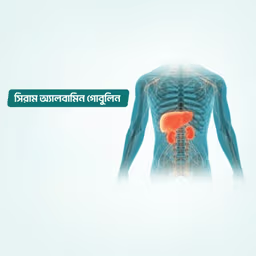
Sex hormone-binding globulin (SHBG) is a protein synthesised by the liver. It helps transport hormones like testosterone, dihydrotestosterone (DHT) and oestradiol in the blood in their biologically inactive forms. When your SHBG levels fluctuate, the number of hormones available for your body’s use can get affected.
SHBG monitors and controls how much of the three hormones testosterone, dihydrotestosterone (DHT) and oestradiol need to be delivered to the body’s tissues. In the absence of the sex hormone-binding globulin, these hormones will not be sent to their respective body tissues for use. Testosterone excess or a lack of it can cause problems in the individual. The sex hormone-binding globulin is essential for adequate and proper use of testosterone.
The Sex hormone-binding Globulin Test measures the level of sex hormone-binding globulin in the blood and helps evaluate testosterone deficiency and testosterone excess.
Although the sex hormone-binding globulin attaches itself to all these three hormones, the Sex hormone-binding Globulin Test is used to measure testosterone alone.
Studies show that the Sex hormone-binding Globulin Test helps monitor children with possible attributes of metabolic syndrome. Research also states that the Sex hormone-binding Globulin Test assesses ischaemic stroke risk in postmenopausal women.
Other names of Sex hormone-binding Globulin Test
TeBG
SHBG Test
Testosterone-oestrogen Binding Globulin
Who is the Sex hormone-binding Globulin Test prescribed for?
The Sex hormone-binding Globulin Test is prescribed for adults of both genders. It is usually advised for men who complain of symptoms due to low testosterone levels and women who exhibit symptoms of high testosterone levels. The Sex hormone-binding Globulin Test is advised when you have symptoms of abnormal testosterone levels and the total testosterone test results are inconclusive.
This test is prescribed in the following cases-
Symptoms of low testosterone levels in men
If you are a man who is experiencing any of the following symptoms, your doctor may advise you to get the Sex hormone-binding Globulin Test done.
Low sex drive
Fertility issues
Difficulty in getting an erection or maintaining an erection
Symptoms of high testosterone in women
If you are a woman experiencing any of the following symptoms, your doctor may advise you to get the Sex hormone-binding Globulin Test done.
Excessive hair growth on the face and body
Acne
Menstrual irregularities
Deepening of voice
Weight gain
Fertility issues
Androgen deficiency, Disorders of puberty, Anorexia nervosa, Thyrotoxicosis
The Sex hormone-binding Globulin Test results are usually reported in nanomoles per litre (mmol/L). If you have gotten the entire hormonal panel of tests done, you will get the reports of all parameters.
The Sex hormone-binding Globulin Test results report the levels of SHBG in the blood.
Adult males (> 18 years)
13.3 - 89.5 nmol/L
Adult females (18 - 46 years)
18.2 - 135.5 nmol/L
Adult females (47 - 91 years, post-menopausal)
16.8 - 125.2 nmol/L
Test result interpretation
Normal Sex hormone-binding Globulin Test ranges may vary depending on the laboratory.
High levels of SHBG indicate that less free testosterone is available to your tissues for use which is indicated by a total testosterone test.
Low levels of SHBG indicate that more of the total testosterone is available for use and not bound to SHBG.
Low sex hormone-binding globulin levels can be seen in people with-
Obesity
Type 2 diabetes mellitus
Metabolic syndrome
Polycystic Ovary Syndrome (PCOS)
Hypothyroidism (underactive thyroid)
Androgen (anabolic steroid use)
Cushing syndrome
Excessive use of glucocorticoids like prednisone or dexamethasone
High sex hormone-binding globulin levels can be seen in people with-
Liver disorders
Hyperthyroidism (overactive thyroid)
Eating disorders like anorexia nervosa
Oestrogen use (hormone replacement therapy in perimenopausal women and oral contraceptives)
Decreased sex hormone (testosterone) production in men (hypogonadism)
Pregnancy
The Sex hormone-binding Globulin Test results are useful for the following conditions-
Diagnosis and follow-up of women experiencing symptoms of androgen excess (PCOS and idiopathic hirsutism)
Monitoring sex-steroid and antiandrogen therapy
Diagnosis of disorders related to puberty
Diagnosis and follow-up of anorexia nervosa
Diagnosis of thyrotoxicosis (a tissue marker for excess thyroid hormone)
Diagnosis and follow-up of cardiovascular diseases, insulin resistance and type 2 diabetes mellitus risk assessment, more specifically in women
Based on your Sex hormone-binding Globulin Test results, the doctor may require some other tests from the hormonal panel to confirm the clinical diagnosis.
The Sex hormone-binding Globulin Test requires a sample of your blood. This test is usually combined with other regular tests.
Sex hormone-binding Globulin Test Preparation
The Sex hormone-binding Globulin Test takes a sample of your blood for testing. It does not require any special preparation. However, if you are getting other related blood tests done along with the Sex hormone-binding Globulin Test, you may need not eat or drink anything for 10-12 hours based on the tests.
a. Before the Sex hormone-binding Globulin Test
This test does not require any preparation from your end. The Sex hormone-binding Globulin Test is usually advised in the mornings for males as the testosterone levels exhibit diurnal variations and are usually higher in the mornings.
b. During the Sex hormone-binding Globulin Test
It is a simple blood test that will get over in 5-10 minutes. You do not need to prepare for the test in any way.
c. After the Sex hormone-binding Globulin Test
There are no restrictions after the Sex hormone-binding Globulin Test. Therefore, you can resume regular activity after the test.
Test inclusions: What parameters are included in the Sex Hormone-binding Globulin Test?
The parameters included in the Sex hormone-binding Globulin Test are the measures of the sex hormone-binding globulin levels in the blood. If you get the Sex hormone-binding Globulin Test done as part of your hormonal profile tests, it will consist of other values like testosterone, follicle-stimulating hormone, luteinizing hormone, oestrogen and progesterone along with the sex hormone-binding globulin levels.
How frequently should you take the Sex hormone-binding Globulin test?
Your doctor may repeat the Sex hormone-binding Globulin Test based on your diagnosis and symptoms. If you start your treatment for excess or deficiency of testosterone in your body, then the doctor may suggest repeating the Sex hormone-binding Globulin Test every 3-6 months to check if the treatment is working.
Regular monitoring and testing allow your doctor to check the prognosis of your condition and how you are responding to the treatment. In addition, follow-up tests of the Sex hormone-binding Globulin Test help provide detailed information about the severity of the disease and how the disease has progressed over time.