
Harmonizing Insight into Liver Function for a Comprehensive Health Profile


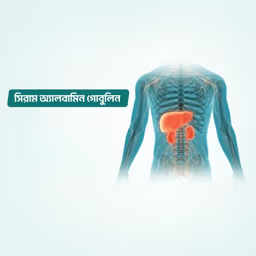
The STP (Serum Total Protein) and AG (Albumin/Globulin) ratio test measures the levels of total protein, albumin, and globulin in the blood. - Serum Total Protein (STP): This measures the total amount of protein in the blood, including albumin and globulin. Proteins are essential for the growth and repair of body tissues. - Albumin/Globulin (AG) Ratio: This ratio is calculated by dividing the amount of albumin by the amount of globulin. The ratio helps to diagnose various health conditions. A low AG ratio can indicate liver disease, kidney disease, or an inflammatory condition, while a high AG ratio can suggest genetic disorders or certain types of leukemia.

Covid Safety
Assured

Free Report
Counselling
Recommended for You


How our test process works!

Purpose: To evaluate the balance of coagulation factors, particularly in patients with clotting disorders or those on anticoagulant therapy.
- Components: Includes measurements of activated protein C (APC) resistance, the effect of anticoagulants, and other factors related to coagulation and fibrinolysis.

1. High STP AG Ratio
- Potential Implications:
- Thrombosis Risk: An elevated ratio might suggest a greater tendency for blood clot formation (thrombosis). This could be due to reduced activity of natural anticoagulants or increased procoagulant factors.
- Anticoagulant Therapy: If the patient is on anticoagulant therapy, a high ratio could indicate that the therapy is insufficient or not effectively controlling coagulation.
- Further Actions: May require adjustment of anticoagulant therapy or additional evaluation of other coagulation factors.
2. Low STP AG Ratio
- Potential Implications:
- Bleeding Risk: A low ratio might indicate an increased risk of bleeding due to overactivity of anticoagulant mechanisms or reduced levels of procoagulant factors.
- Anticoagulant Therapy: If the patient is on anticoagulant therapy, a low ratio could suggest that the therapy is too strong, leading to an increased bleeding risk.
- Further Actions: Might require adjustment of anticoagulant therapy or investigation into other causes of bleeding tendencies.
Other Considerations
- Patient History: Assessment should consider the patient’s history, including any previous thrombotic or bleeding events, family history, and current medications.
- Additional Tests: Sometimes, additional tests might be necessary to get a comprehensive view of the coagulation status, such as measuring individual coagulation factors or genetic testing for inherited conditions.
Always work with a healthcare provider to interpret results accurately and to determine appropriate next steps based on the individual patient’s health status and history.

- Ratio: The normal range can vary depending on the specific test methods and laboratory standards. Typically, the STP AG ratio is considered normal if it falls within the range established by the lab performing the test. For many labs, this is around 1.0, but specific reference ranges should be verified with the lab.

Interpretation
- High Ratio: May indicate a higher risk of clot formation (thrombosis) or that anticoagulant therapy is not adequately controlling coagulation.
- Low Ratio: May suggest a higher risk of bleeding or that anticoagulant therapy is excessively controlling coagulation.

- Blood Sample: Usually collected in a citrate tube to prevent clotting and ensure accurate measurement of coagulation factors.
Frequently Asked Question
STP AG Ratio
Harmonizing Insight into Liver Function for a Comprehensive Health Profile


The STP (Serum Total Protein) and AG (Albumin/Globulin) ratio test measures the levels of total protein, albumin, and globulin in the blood. - Serum Total Protein (STP): This measures the total amount of protein in the blood, including albumin and globulin. Proteins are essential for the growth and repair of body tissues. - Albumin/Globulin (AG) Ratio: This ratio is calculated by dividing the amount of albumin by the amount of globulin. The ratio helps to diagnose various health conditions. A low AG ratio can indicate liver disease, kidney disease, or an inflammatory condition, while a high AG ratio can suggest genetic disorders or certain types of leukemia.
Covid Safety
Assured
Free Report
Counselling
