
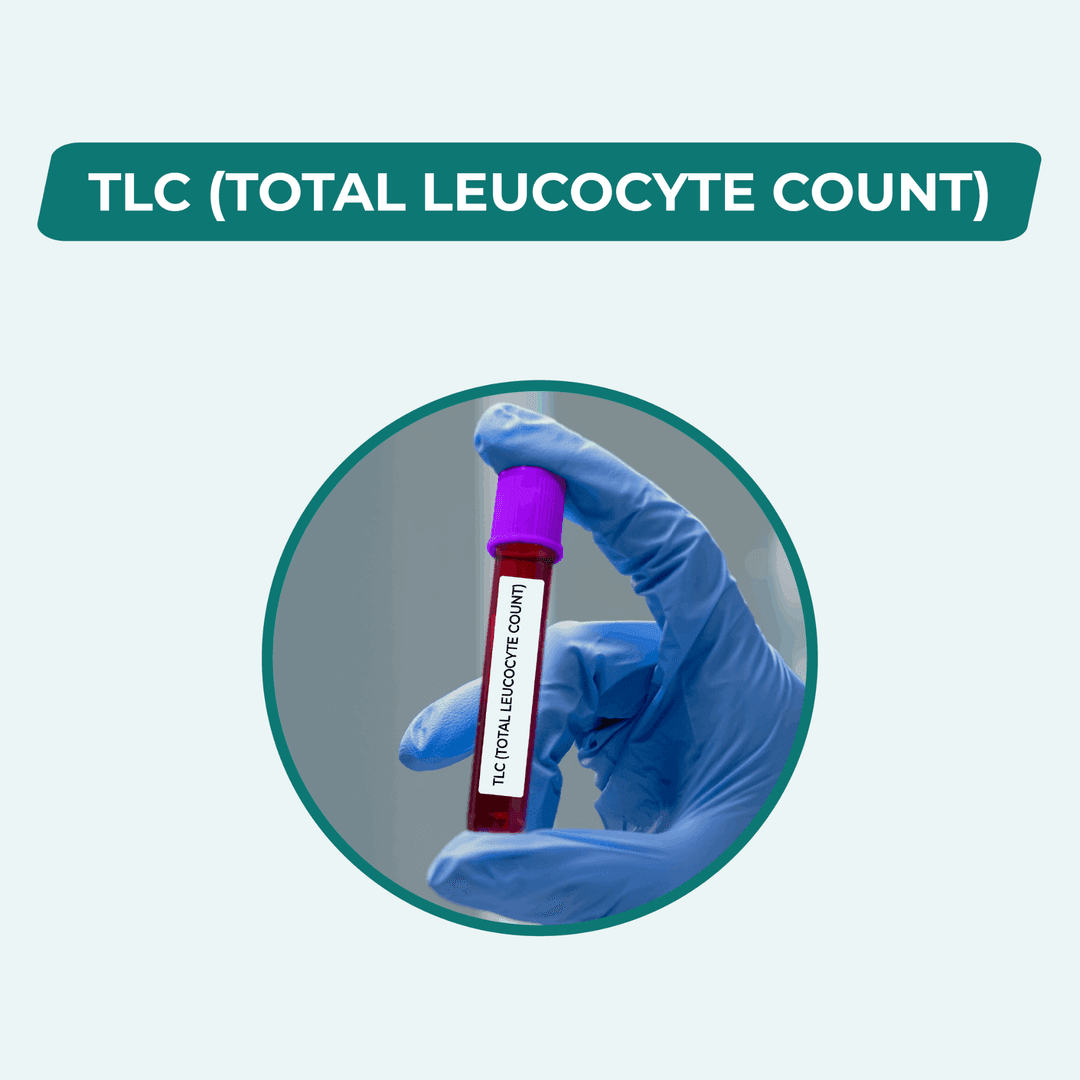
A test to measure the total number of white blood cells (WBCs) in the blood.


The Total Leucocyte Count (TLC) test measures the number of white blood cells (leukocytes) in the bloodstream. WBCs are crucial for the immune system, helping the body fight infections, inflammation, and other diseases. Abnormal levels may indicate infections, immune disorders, or bone marrow issues.

Covid Safety
Assured

Free Report
Counselling
Recommended for You


How our test process works!

Overview:
The Total Leucocyte Count (TLC) test measures the total number of white blood cells (WBCs) in the blood. WBCs play a crucial role in the immune system by defending the body against infections and foreign invaders. This test is often included in a Complete Blood Count (CBC) panel.

Risk Assessment:
-
Increased TLC (Leukocytosis) may indicate:
- Infection
- Inflammation
- Stress
- Leukemia
- Autoimmune diseases
- Allergic reactions
-
Decreased TLC (Leukopenia) may indicate:
- Viral infections
- Bone marrow disorders
- Autoimmune diseases
- Chemotherapy side effects
- Nutritional deficiencies (e.g., Vitamin B12, folate).

Normal Range:
- Adults: 4,000 – 11,000 WBCs per microliter (µL) of blood
- Children: 5,000 – 15,000 WBCs/µL
- Newborns: 9,000 – 30,000 WBCs/µL
(Values may vary slightly based on the laboratory and individual health conditions.).

Interpretation:
- Higher than normal (>11,000 WBCs/µL): Possible infection, inflammation, stress, or hematological disorders.
- Lower than normal (<4,000 WBCs/µL): May suggest immune suppression, viral infections, or bone marrow disorders.

Sample Type:
- Specimen: Venous blood
- Collection Method: Blood sample drawn from a vein (usually from the arm)
- Preparation: No special fasting required unless specified by a doctor.
Frequently Asked Question
TLC (TOTAL LEUCOCYTE COUNT)
A test to measure the total number of white blood cells (WBCs) in the blood.


The Total Leucocyte Count (TLC) test measures the number of white blood cells (leukocytes) in the bloodstream. WBCs are crucial for the immune system, helping the body fight infections, inflammation, and other diseases. Abnormal levels may indicate infections, immune disorders, or bone marrow issues.
Covid Safety
Assured
Free Report
Counselling