
Probing Liver and Heart Health through Enzymatic Insight


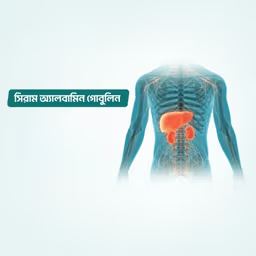
AST (aspartate aminotransferase) is an enzyme that is found mostly in the liver, but it's also in muscles and other organs in your body. When cells that contain AST are damaged, they release the AST into your blood. An AST blood test measures the amount of AST in your blood. The test is commonly used to help diagnose liver damage or disease.

Covid Safety
Assured

Free Report
Counselling
Recommended for You


How our test process works!

Overview:
The AST (SGOT) test measures the level of aspartate aminotransferase, an enzyme found in the liver and other organs. It helps assess liver health and detect damage to liver cells or other tissues.

Risk Assessment:
Elevated AST may indicate:
-
Liver diseases (e.g., hepatitis, cirrhosis)
-
Heart disease or recent heart attack
-
Muscle injury or disorders
-
Alcoholic liver damage
-
Certain medications or toxins

Normal Range:
-
Adult Male: 10–40 U/L
-
Adult Female: 9–32 U/L
(Values may slightly vary between labs)

Interpretation:
-
High AST: Suggests damage to liver, heart, or muscles.
-
Mild elevation: May be due to fatty liver or medication use.
-
Very high levels: May indicate acute liver injury or hepatitis.
-
AST:ALT ratio: Used to differentiate between liver and non-liver causes (e.g., ratio >2 suggests alcoholic liver disease).

Frequently Asked Question
AST (SGOT)
Probing Liver and Heart Health through Enzymatic Insight


AST (aspartate aminotransferase) is an enzyme that is found mostly in the liver, but it's also in muscles and other organs in your body. When cells that contain AST are damaged, they release the AST into your blood. An AST blood test measures the amount of AST in your blood. The test is commonly used to help diagnose liver damage or disease.
Covid Safety
Assured
Free Report
Counselling
