
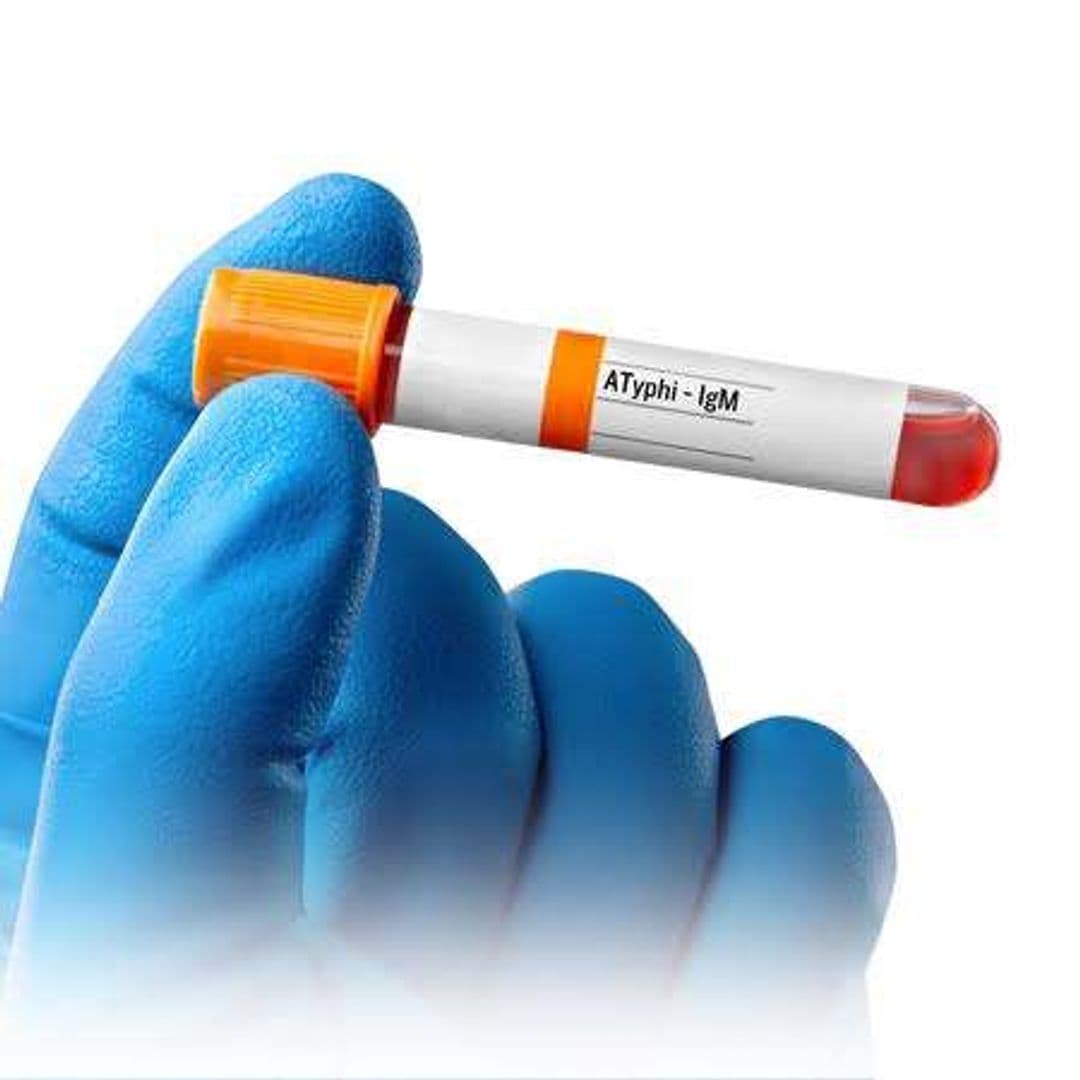
TYPHI DOT/ SALMONELLA TYPHI IGM


Typhi Dot / Salmonella Typhi IgM" test is used to detect the presence of IgM antibodies against Salmonella Typhi, the bacterium responsible for typhoid fever. A positive result indicates recent infection or exposure to Salmonella Typhi, helping diagnose active or early-stage typhoid fever. This test is often used in conjunction with other clinical evaluations to confirm the diagnosis.

Covid Safety
Assured

Free Report
Counselling
Recommended for You


How our test process works!

Overview
The Typhi Dot/Salmonella Typhi IgM test is a serological test used to detect IgM antibodies against Salmonella typhi, the bacterium responsible for typhoid fever. This test helps in the early diagnosis of typhoid fever, typically within the first week of infection.Test Purpose:To confirm the presence of acute typhoid fever by detecting IgM antibodies specific to Salmonella typhi.

Risk Assessment
- High Risk Groups:
Individuals living in or traveling to endemic regions.
People consuming contaminated food or water.
Those exposed to poor sanitation.
- Potential Risks Without Treatment:
Untreated typhoid can lead to complications such as intestinal perforation, septicemia, or long-term carriage of the bacterium.

Normal Range:
-
- Negative: Indicates no detectable IgM antibodies.
- Reference ranges may vary depending on the lab but are usually reported as positive or negative.

Negative Result:
-
- No Salmonella typhi IgM antibodies detected.
- Suggests absence of acute infection.
- If symptoms persist, further testing (like blood culture) may be needed.
Positive Result:
-
- Indicates recent or acute infection with Salmonella typhi.
- Usually confirms typhoid fever when correlated with clinical symptoms (fever, abdominal pain, etc.).

A small blood sample, collected through venipuncture.
Frequently Asked Question
TYPHI DOT/ SALMONELLA TYPHI IGM
TYPHI DOT/ SALMONELLA TYPHI IGM


Typhi Dot / Salmonella Typhi IgM" test is used to detect the presence of IgM antibodies against Salmonella Typhi, the bacterium responsible for typhoid fever. A positive result indicates recent infection or exposure to Salmonella Typhi, helping diagnose active or early-stage typhoid fever. This test is often used in conjunction with other clinical evaluations to confirm the diagnosis.
Covid Safety
Assured
Free Report
Counselling
